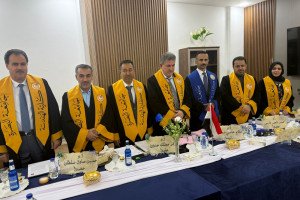
The doctoral dissertation of researcher Ahmed Ismail Hadi was discussed at the College of Engineering, University of Basrah, Department of Mechanical Engineering, entitled Electricity / Freshwater Generation Using Solar Tower Power Plant And Multi-Effect
Desalination System
Solar energy is the preferred renewable energy option for competing with fossil fuels in water desalination and power generation, given its ability to utilize both heat and power in the process. Solar energy powers approximately two-thirds of renewable-powered desalination facilities. The current study aims to utilize the available solar energy in Basra City for the combined generation of electricity and freshwater using a solar tower combined with a multi-effect distillation plant. The main integrated system consists of five subsystems. Five comprehensive mathematical models were developed to simulate the system using the Engineering Equation Solver (EES) software: The first model calculates solar radiation intensity, the second analyzes solar field efficiency, the third analyzes the thermal density of the receiver, the fourth analyzes the Rankine steam cycle, and finally, there is a model for the multi-effect distillation plant. A comprehensive parametric study was conducted to evaluate the impact of environmental and design parameters on the system's performance in terms of electricity and freshwater production during the summer months (June, July, and August) and winter months (January, February, and December).
The main findings of the current study can be summarized as follows: The highest electricity and freshwater production occurred during the afternoon, specifically at 12:00. Electricity production in the summer was higher by 104.66% compared to the winter, with the highest electricity production in the summer reaching 57.1 MW in June, while in winter it was 27.9 MW in February. As for freshwater production, it was higher in the summer by 103.57% compared to winter, reaching 387.6 kg/s in June, while in winter it was 190.3 kg/s in February.
Increasing the radial distance negatively impacts system performance. The decrease in electrical energy production was 22% and 38% for the summer and winter seasons, respectively, while the decrease in fresh water production was 21% and 35% for the same two seasons.
The temperature of the molten salt at the outlet adversely affected the system's performance. Electricity production decreased by 6% during the summer months and 13% during the winter months, while freshwater production decreased by 3% and 7% for the two seasons, respectively. The low turbine exhaust pressure was the variable that recorded the highest cumulative value for fresh water in all the months studied during both the summer and winter seasons.
The optimal feedwater heater pressure ranges between 11–12 bar, achieving an ideal balance between electricity and freshwater production, while the optimal low-pressure turbine pressure in summer ranges between 22–35 kPa, improving system efficiency and overall performance of the solar power tower integrated with desalination.
The low turbine exhaust pressure was the variable that recorded the highest cumulative value for fresh water in all the months studied during both the summer and winter seasons.
Finally, the total electricity production ranged between 334-375 MWh/12h, which is equivalent to two to three times the daily demand in Al-Faw (~141 MWh/day). The system was also efficient in freshwater production during the summer, with a total production of 5,416–6,352 m³/12h, equivalent to 73–86% of the reference demand (7,394 m³/12h)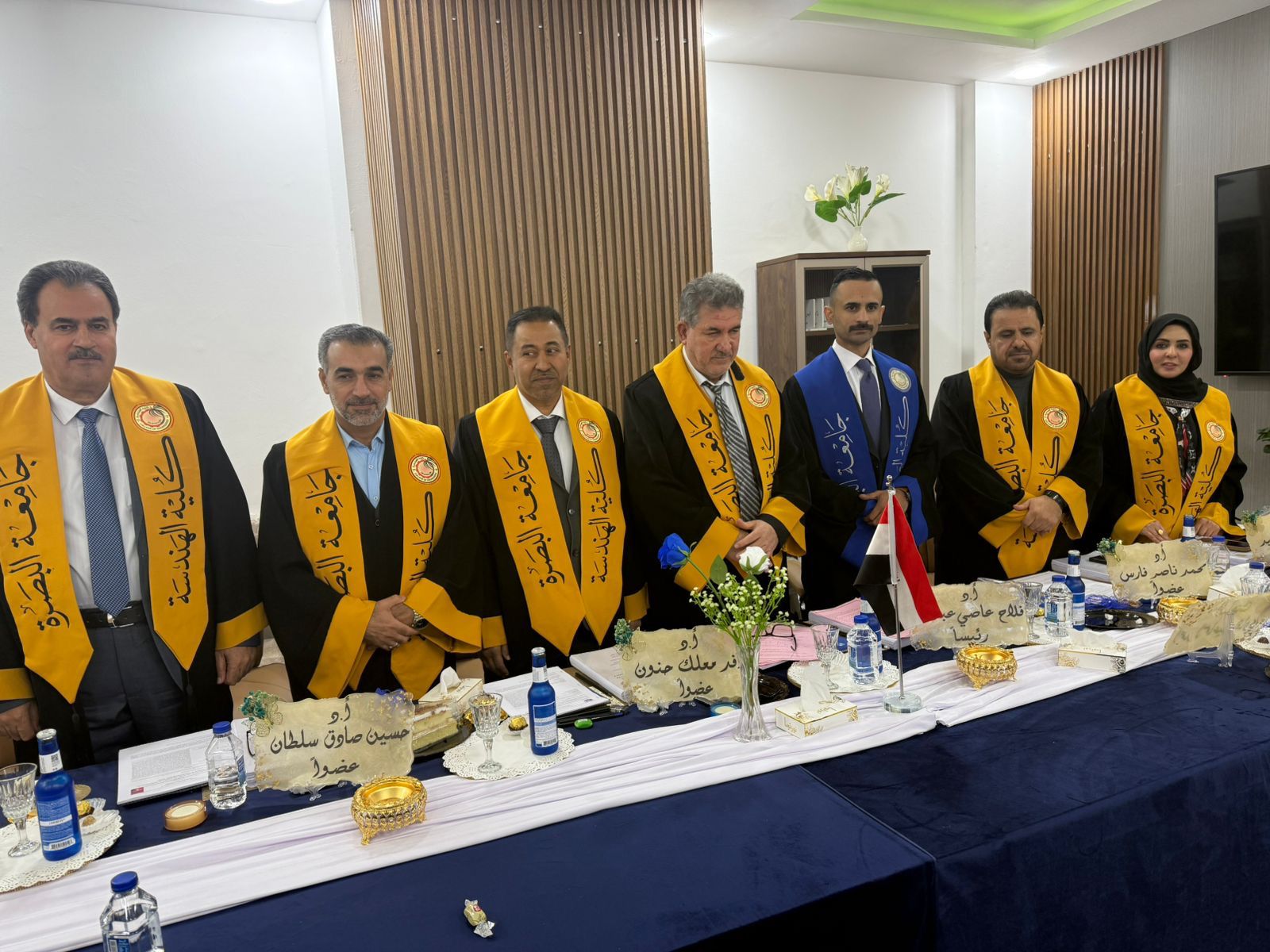
Important News


viewed most