The College of Engineering, University of Basra, announces the publication of a scientific book by Professor Dr. Ali Hassan Dahim, a faculty member in the Department of Civil Engineering, entitled "Drainage Engineering." This academic achievement adds to the college's distinguished record of scientific and intellectual contributions.
Furthermore The book begins with the principles of drainage engineering, introducing the
definition, objectives, historical development, and importance of drainage systems. It
highlights the role of drainage in protecting infrastructure, improving soil and
agricultural productivity, and addressing environmental and public health concerns.
Various classifications of drainage systems including surface, subsurface, and urban
stormwater drainage are presented to establish a clear conceptual foundation.
A strong emphasis is placed on hydrology as the basis of drainage design, with
dedicated coverage of the hydrologic cycle, rainfall–runoff processes, infiltration,
runoff estimation, and peak flow determination. Modern tools such as remote sensing
and GIS are also introduced to reflect contemporary practices in hydrological
analysis.
The text further explores soil properties and drainage requirements, focusing on soil–
water relationships, hydraulic conductivity, water table behavior, and capillarity, all of
which are essential for understanding drainage performance. Detailed chapters on
surface drainage systems and channel design address layout planning, erosion control,
and long-term maintenance considerations.
Substantial attention is devoted to subsurface drainage, including the theoretical
foundations of flow to drains, steady and unsteady flow equations, and practical
design considerations such as drain spacing, depth, envelopes, and pipe materials. The
book also covers vertical drainage systems (drainage wells), explaining their
principles, design criteria, construction, and operation under both confined and
unconfined aquifer conditions.
Finally, the book addresses integrated drainage systems, emphasizing the combined
use of surface and subsurface drainage, interaction with irrigation systems, and the
role of drainage in controlling waterlogging and soil salinity. Emerging challenges
such as climate change, sustainability, and smart drainage systems are discussed to
prepare students and engineers for future developments in the field.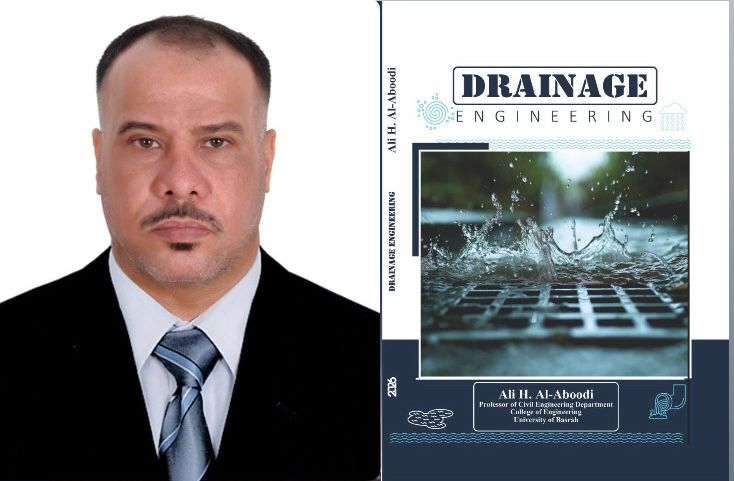
Important News

viewed most