The doctoral dissertation of researcher Haider Hassan Ali was discussed at the College of Engineering, University of Basrah, Department of Electrical Engineering, under the supervision of Professor Dr. Basil Hani Jassim, entitled Control Design and Energy
Management for Microgrid with
Uncertain Connection with
Utility Grid
The thesis proposed an advanced hierarchical structure comprising primary and secondary control layers integrated with an improved energy management system (EMS) to enhance power quality and stability. In the primary control layer, the
case study I proposed an improved strategy to dynamically adjust the
droop active power coefficient using an modified camel algorithm(MCA).
Using this strategy, the trade-off between transient response speed and
steady-state frequency regulation has been resolved. A typical side effect
of the fixed-droop control coefficient that arises from step changes in load or various operating conditions. In Addition, the complementary proposed
structure has been implemented as secondary control to improve the ac
tive and reactive power sharing. The complementary structure combines
the MCA algorithm for improving active power sharing with the consensus
algorithm for improving power sharing. In the EMS, case study II shows
the effectiveness of the proposed flatness control method compared with
the conventional proportional PI control method in HMG configuration by
enhancing the overcharging and deep discharging of the BESS, which leads
to an increase in the batteries life time due to various operating condi
tions. To validate and optimize operating environments, such as voltage
stability and power imbalance, Case Study III proposes an artificial neural
network (ANN) controller combined with a proportional integration (PI)
controller integrated in the dq-axis framework to overcome the limitations
of using the conventional PI controllers due to dynamic performance under
transient problems, sudden loads, and grid or load fluctuations. By incor
porating outer control loops assisted by the ANNs with inner dq current
controllers based on PI controllers, an ANN-facilitated adaptive nonlinear
voltage regulator that confirms a lower steady-state error and is highly ac
curate in active/reactive power decoupling even under irradiance and load
changes. The profile tests for the proposed methods have been designed
in the MATLAB/Simulink environment. The designed controllers success
fully improve the voltage and frequency deviations, settling time, THD,
and power sharing for the autonomous HMG.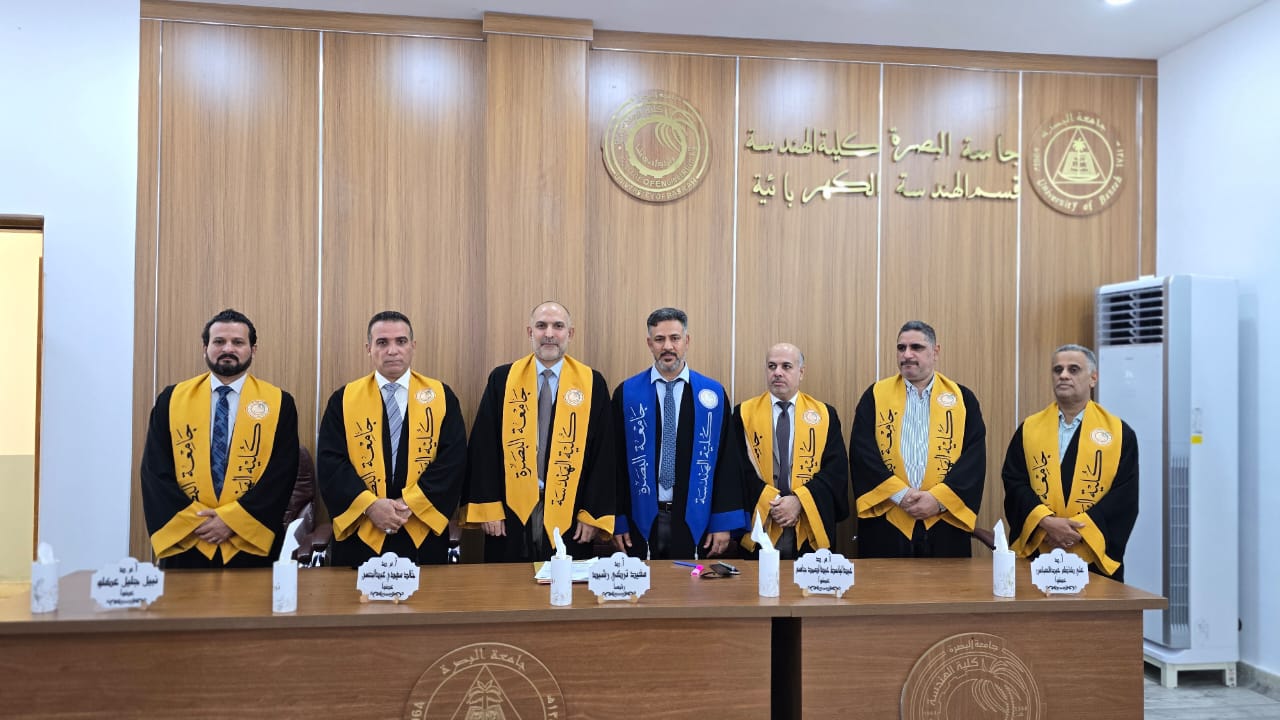


Important News


viewed most