
The PhD dissertation of researcher Kawakib Nasser Abdul Hassan was discussed at the College of Engineering, University of Basra, Department of Civil Engineering, under the supervision of Professor Dr. Mohammed Jawad Kadhim and Assistant Professor Dr. Ammar Ashour Aksh. The dissertation is titled OPTIMAL MANAGEMENT OF GROUNDWATER DESALINATION IN UMM-QASR AREA /SOUTH OF IRAQ
With time, there is a limitation in freshwater resources, especially in arid regions, such as Umm-Qasr city in Basra Province/ south of Iraq. This issue has necessitated the desalination of available water resources, such as groundwater, to produce the water necessary for various uses, including drinking purposes. This study aims to develop an optimal management scheme for desalinating the groundwater in Umm-Qasr area using the reverse osmosis (RO) technique. To achieve this aim, field and laboratory data were collected that related to groundwater quality and levels. In addition, groundwater modeling was conducted using Visual MODFLOW Classic software, and the model was calibrated using the Parameter ESTimation (PEST) modeling technique.
Monthly measurements of groundwater levels during the periods extending from June/2023 to December/2024. The measurement sets were used for calibrating and validating the flow model. After completing the validation process, two approaches were implemented to examine the productivity increase of the existing wells over twenty years. The first approach involved adding 45 wells, and the second involved adding 54 wells, to operate the RO plant. Four future pumping scenarios were adopted for each approach to predict the future groundwater flow changes in the study area. The first scenario was modeled assuming constant pumping rates of 412.5 and 480 m³/day for the added 54 and 45 wells, respectively. In the second scenario, the pumping rate was increased by 20% every five years compared to the first scenario. The third scenario was modeled assuming that the pumping rate implemented in the year 2023 (366 and 279 m³/day for the newly added and existing wells, respectively). For the fourth scenario, it was assumed that future pumping from the reservoir will increase annually at a rate parallel to the population growth, and that the area's population will depend entirely on the water produced by the RO plant. The recovery rate of the RO plant was assumed to be 50 %. The optimal solution system for the scenarios were implemented by combining Visual MODFLOW with the MODFLOW 96 flow engine software and using Strongly Implicit Procedure (SIP) solver based on the Genetic Algorithm (GA).
The groundwater samples were taken at an interval of two months and analyzed to determine their chemical and physical properties. The RO plant was designed by using the WAVE software employing different design scenarios for each train from the four trains of RO plant, such as recovery rate (50 %, 60 %, and 65%), the number of stages (single-stage and two-stage), and the types of membranes used (SW30XLE400, SW30XLE440, SW30XLE440i, SEAMAXX440, and SEAMAXX440i). The number of membranes per pressure vessel was (6 and 8).
The modeling results of groundwater flow in the study area showed that: (1) The static groundwater levels ranged from 0.05 to 1.32 meters above mean sea level (MSL) while the groundwater depths ranged from 14.36 to 16.81 meters below the ground surface, (2) the lowest groundwater level after twenty years in the case of adding 54 wells was -8 m with respect to MSL, while it was -14 m in the case of adding 45 wells, (3) The optimal pumping yield was 3.82 E+04 m³/day from the 64 wells, and the lowest groundwater level after twenty years was -7 m.
The results of water quality analyses showed that: (1) the values of the cations and anions concentration exceeded those recommended by the WHO standards and the IQS for drinking water. (2) The average value of TDS was 15206 mg/l, thus classifying the groundwater as very saline water according to the Hem classification. (3) The Piper diagram results classified the groundwater hydrochemically as sodium chloride.
The implemented of different RO design scenarios with considering the groundwater quality in the study area showed that the optimum RO plant for desalinating the groundwater in Umm-Qasr area is of four trains, with a feed water flow rate of 398.5 m³/hfor each train and recovery rate of 65 %. The recovery rate of 65 % was achieved by using SW30XLE440 and W30XLE440i membranes. Lower cost and specific energy consumption of the RO plant were achieved when used, 6 membranes per pressure vessel, and the pressure vessels arranged in a single stage.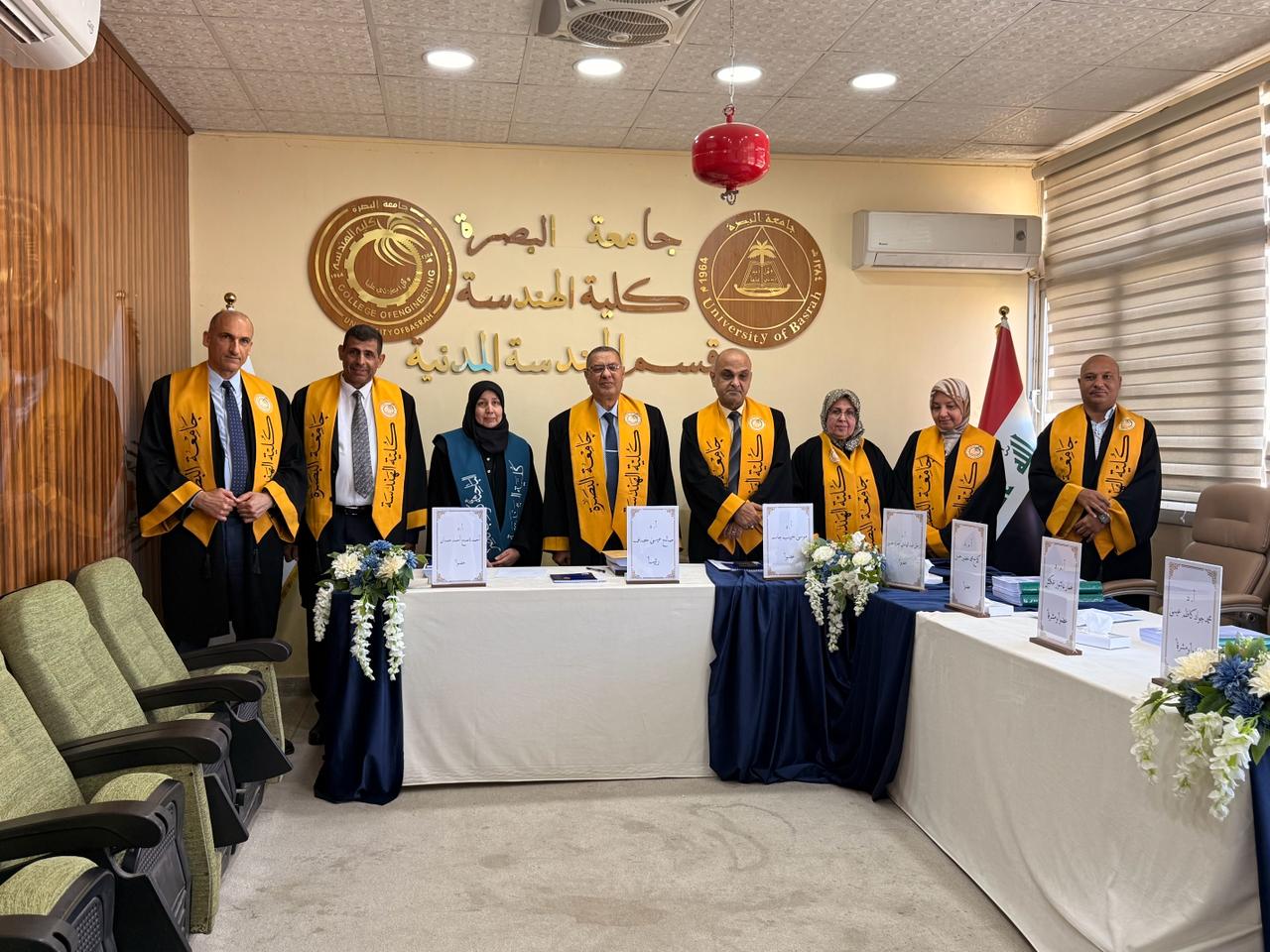
Important News



viewed most