The Master's thesis of researcher Noor Saad Hannoun was discussed at the College of Engineering, University of Basra, Department of Computer Engineering, under the supervision of Professor Dr. Ghaydaa Abdul-Razzaq Suhail, entitled Medical Image Analysis Using Hybrid Deep Learning for Feature Extraction in Disease Detection
It includes...
Medical image analysis has turned out to be a cornerstone of contemporary healthcare, facilitating precise disease detection, anatomical assessment, and treatment planning, as well as clinical decision support through intricate computational analytics. From this perspective, early diagnosis of cancer, particularly lung cancer, plays a very significant role since it has a high mortality rate, along with considerable survival benefits. While promising results from the application of AI and deep learning techniques are anticipated for future medical imaging techniques, many existing techniques in the field face challenges such as inadequate features and representation, as well as the use and integration of smaller datasets and learning strategies, respectively.
This thesis proposes four AI-driven hybrid architectures designed to improve the diagnosis of lung cancer using computed tomography (CT) scans and histopathological images (HIs). First, LCxNet, a new explainable lightweight custom deep learning architecture, is developed for efficient CT-based lung cancer classification. Second, a weight-ensemble hybrid framework, called (LCD-VRD), combined complementary representations from three pre-trained transfer learning models—VGG16, ResNet50V2, and DenseNet121. Third, the HiF-LC framework is developed via integrating handcrafted descriptors, deep learning features, and feature fusion strategies with machine learning classifiers. Hybrid configurations such as HOG-KNN and (LBP+VGG16)-SVM. Finally, the proposed LCxViT architecture combines DenseNet121 feature extraction with a Vision Transformer (ViT) to jointly capture local and global contextual information in histopathological image classification. In closing, this thesis underscores the effectiveness, robustness, and reliability of hybrid deep learning models in cancer diagnosis while opening promising avenues for future research to further advance performance beyond current state-of-the-art approaches.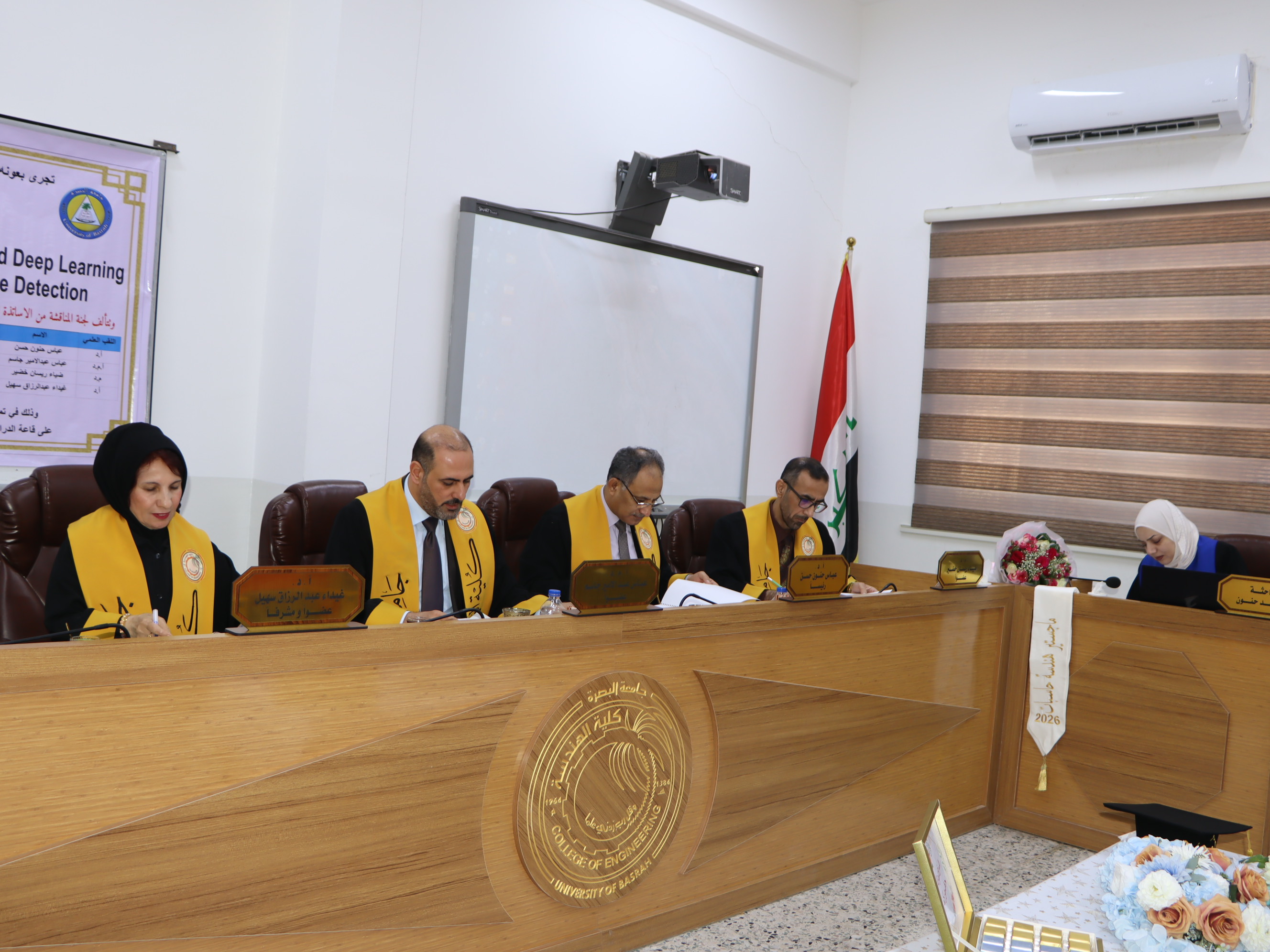
Important News


viewed most