The Master's thesis of researcher Ahmed Raad Dawood was discussed at the College of Engineering, University of Basrah, under the supervision of Professor Dr. Mazen Abdul-Imam Ahmed and Assistant Professor Dr. Ihsan Qasim Mohammed. The thesis, titled Numerical Investigation of Ring Foundations Adjacent to Slope includes...
The design of shallow footing systems next to sloping ground is one of the
most challenging problems in the field of geotechnical engineering due to the
multifaceted soil structure interactions and loading conditions. This research is
centered on the behavior of ring foundations utilized in different applications such
as chimneys, water and oil storage tanks, silos, and wind turbine generators.
Although rings are usually constructed on ground surfaces that are horizontal
(flat), there is not much published literature on the behavior of ring foundations
constructed in close proximity to sloped ground, where the stability of the soil
mass around the foundation is compromised and poses a multitude of problems in
terms of asymmetric loading and differential soil mass settlement.
This research aims to analyze the behavior of ring foundations adjacent to
slopes in order to determine their performance in ultimate bearing capacity and
some field observables of settlement that occur due to the application of axial
loads. The research study is carried out on the use of finite element software
PLAXIS 3D, which allows for the modeling of three-dimensional soil structure
systems and soil-structure interaction. In particular, the research study's focal
point is on the slope angle (β), the distance between the foundation and the top
edge of the slope (b), the inner to outer radius ratio (ri/ro), the foundation thickness
(t), and the soil properties. The research considers three-dimensional simulations
of sandy soils using the Mohr-Coulomb failure criterion.
The simulation framework was initially validated by comparing
simulation results from the PLAXIS 3D model with theoretical values, and using
the same analytic equations from the previous studies, calculations were made to
model a ring foundation on a flat, sandy, level surface. The PLAXIS 3D model
validation outcomes were within an acceptable error range, proving its ability to
model the behavior of ring foundations.
IVThere were a number of interesting observations that became evident from
the parametric analysis outcomes. Results show that the effect of the distance
between the foundation and the top edge of the slope, an increase in bearing
capacity is observed with increasing b/B ratio, and all slope angles exhibit
consistent settlement decrease as b/B increases. However, once the lag distance
reached b/B ≥ 1, the foundation performance was equivalent to that of plain
ground, which meant it was performing in a safer manner. Additionally, the slope
angle (β) has a proportional influence on the bearing capacity and stability. As the
slope angle was increased from 25° to 45°, it was discovered that the bearing
capacity greatly decreased, as well as the possibility of local soil failure occurring,
along with a marked increase in differential settlement. Also, the ring geometry
(ri/ro ratio) was of considerable importance. The results showed that bearing
capacity for all slope angles was lower with a higher ri/ro ratio, and subsidence
was less as ri/ro increased from 0.4 to 0.8. Regarding the influence of foundation
thickness (t), the results indicated that an increase in the ring thickness from 1 to
3 m led to an increase in bearing capacity. In addition, greater thickness results in
a slight reduction in settlement.
Soil properties, particularly internal friction angle (ϕ), were instrumental
in assessing the settlement and bearing capacity. Bearing capacity increases
significantly with an increase in friction angles. Further investigated are the
internal stress reactions of the foundation system, like the shear force and bending
moment of the foundation system.
This study has reviewed in detail the ring foundation systems located
adjacent to the slope and the systems' performances. The results indicate that for
the structure to be safe, there must be an adequate critical assessment of the
system, and of the soil properties surrounding the foundation system, that takes
into consideration the orientation and position of the foundation system to the
slope.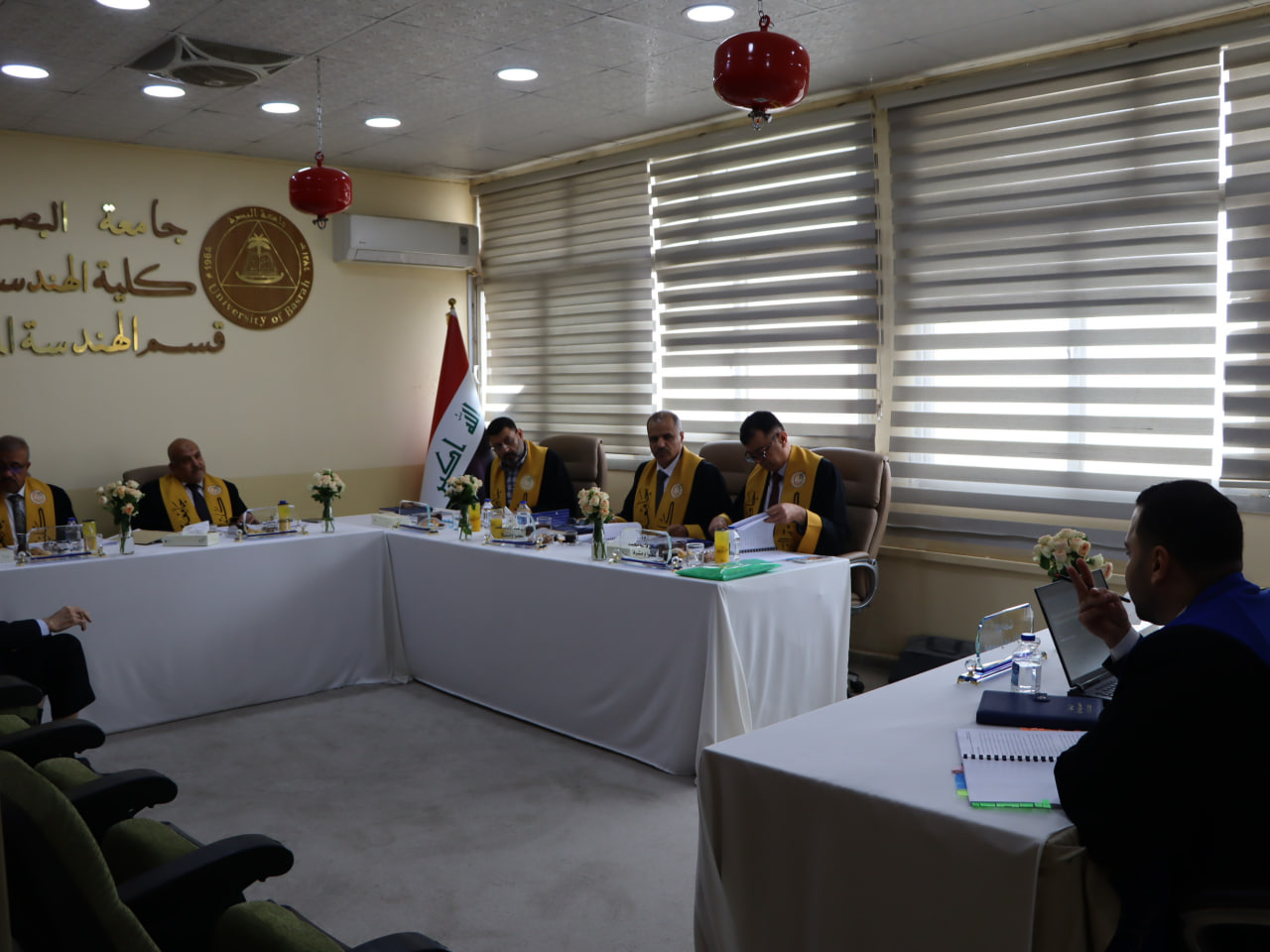
Important News


viewed most