
The Master's thesis of researcher Sajjad Nassif Jassim was discussed at the College of Engineering, University of Basrah, Department of Mechanical Engineering, under the supervision of Assistant Professor Dr. Rahim Khazal Masawil. The thesis was titled "A SIMULATION AND MACHINE LEARNING APPROACH FOR TEMPERATURE DISTRIBUTION PREDICTION IN FRICTION STIR SPOT WELDING
It includes
A recent scientific study has been conducted to investigate the use of numerical simulation and machine learning techniques to predict the temperature distribution and mechanical behavior in the Friction Stir Spot Welding (FSSW) process. This welding technique is considered environmentally friendly, economically efficient, and widely used for joining low-melting-point metals.
The study adopted a data-driven framework that integrates experimental analysis, numerical simulation using COMSOL software, and machine learning techniques to analyze the performance of welded joints in both similar metals (aluminum/aluminum) and dissimilar metals (aluminum/copper). The research also focused on examining the influence of welding tool geometry, particularly threaded and non-threaded pins, on temperature distribution and joint quality.
Temperatures during the welding process were monitored in real time using a thermal camera and an infrared thermometer. The results showed that the temperatures generated during welding of dissimilar materials were significantly higher than those for similar materials, reaching approximately 350°C compared to 219°C. It was also found that the use of a threaded pin produced higher temperatures and improved the properties of the welded joint.
Comparisons between the experimental measurements and numerical simulation results demonstrated strong agreement in temperature distribution within the welding zone and the surrounding regions. The lap shear strength of the welded joints ranged between 1.2 and 2.54 kN, depending on the welding process parameters.
From an analytical perspective, the study employed several machine learning algorithms to predict the thermal and mechanical behavior of the welded joints. Among these, the Random Forest algorithm showed the best predictive performance, achieving high accuracy with R² = 0.97 for thermal behavior and R² = 0.96 for mechanical behavior.
The study highlights the importance of integrating experimental work, numerical simulations, and artificial intelligence techniques to improve friction stir spot welding processes, contributing to the development of more efficient and precise industrial applications.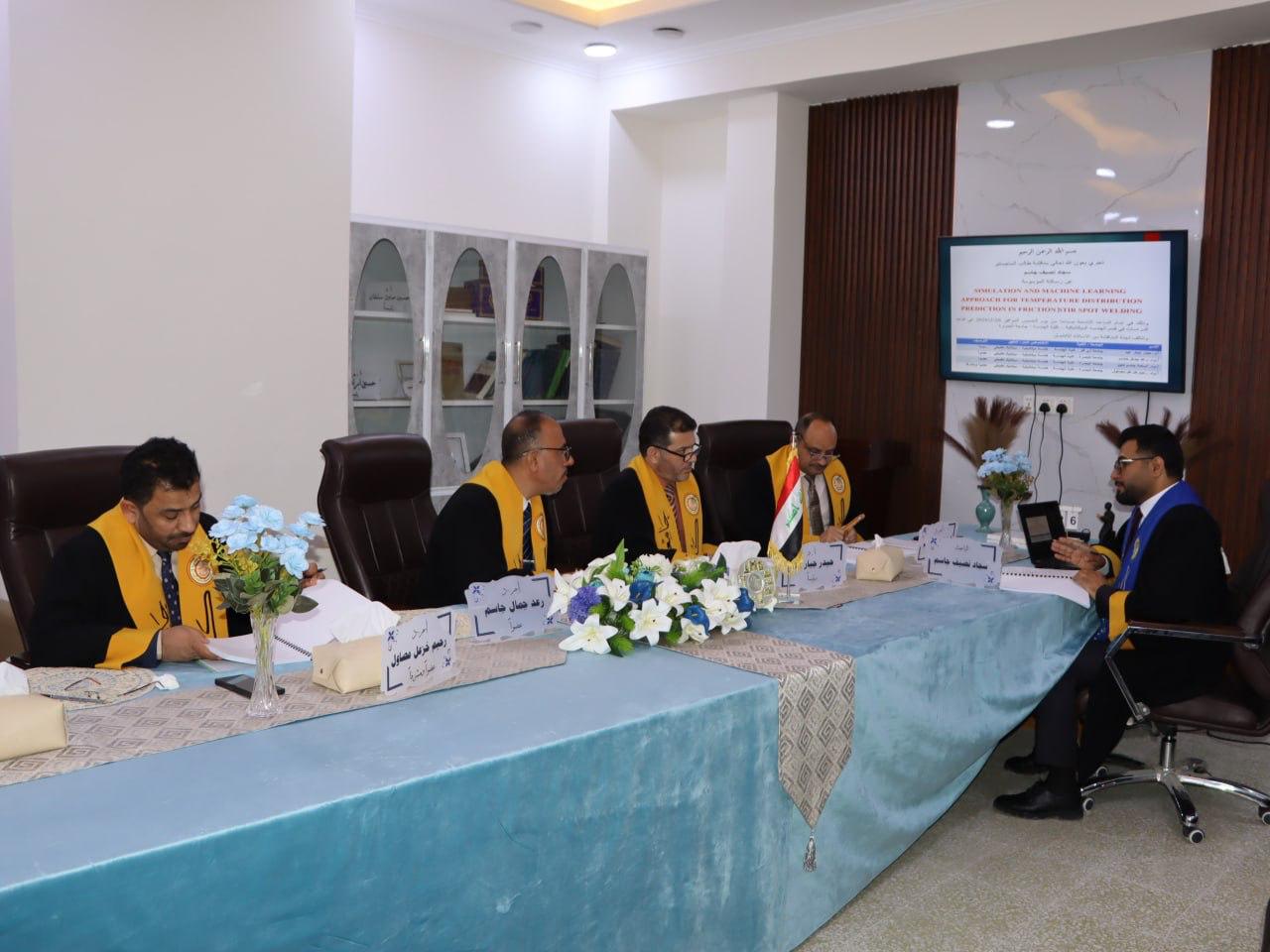
Important News



viewed most