Assistant Lecturer Ahmed Hamid Majeed, a faculty member at the College of Engineering, University of Basrah, published a research paper in the Asian Journal of Computer Science Research entitled... 6G-Enabled IoT: Emerging Communication Technologies, AI Integration, and Future Research Directions
Abstract
The development speed of IoT applications has brought with it ultra-low delay, high reliability,
large-scale access, and energy saving needs. 5G makes massive IoT possible, but new use cases
like autonomous systems, XR, Industry 4.0, and smart cities are beyond what our networks can
support today. 6G will solve these problems by leveraging advanced technologies, such as THz
communication (TC), RIS, massive MIMO (mMIMO), ultra-dense networks (UDNs), and integrated
space–air–ground links. The convergence of IoT with sixth generation (6G) wireless networks is
envisioned to open a new era of smart, autonomous and ultra-connected things. Contrary to the
past generations, 6G is expected to deliver ultra-low latency (sub-millisecond), extremely high
throughput (terabit per second scale), massive connection of devices, integrated sensing and
communication, and in-network AI natively. In this paper, we follow a systematic review
methodology to analyze the state-of-the-art literature from 2020–2025, organize the examined
works based on the types of communication technologies used, types of AI integration, security,
QoS/URLLC support, and energy sustainability, and outline open challenges and research gaps.
We, therefore, present a Broader cross-layer perspectives in terms of 6G-based IoT solutions by
integrating the aspects of AI intelligence for sustainable communication solutions along with the
support of network slicing, URLLC and management of a secure architecture in this paper. The
significance of these technologies and the impact they can have for next-generation intelligent IoT
applications are discussed, and finally open issues and future research directions towards IMT-
2030 are presented.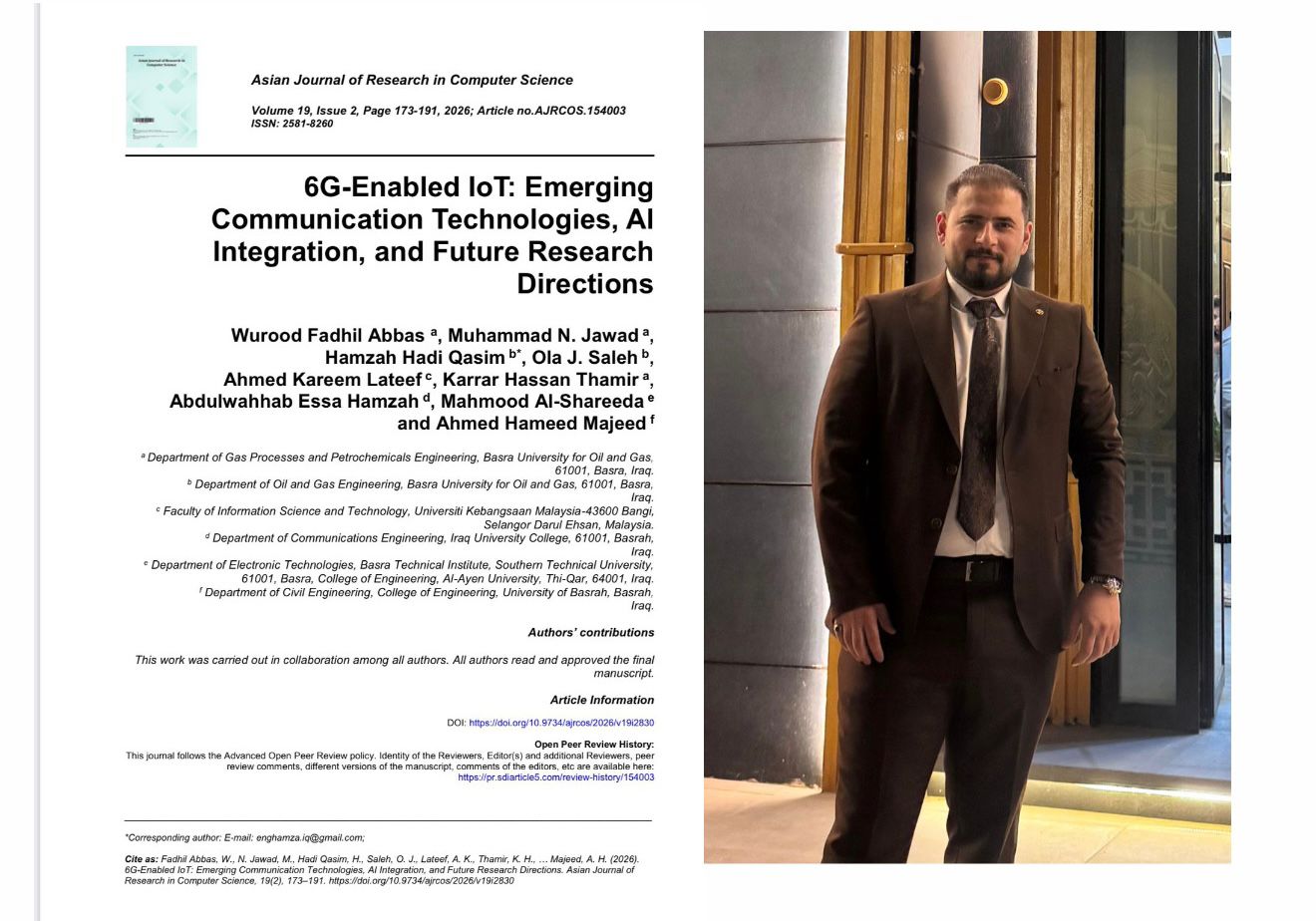
Important News


viewed most