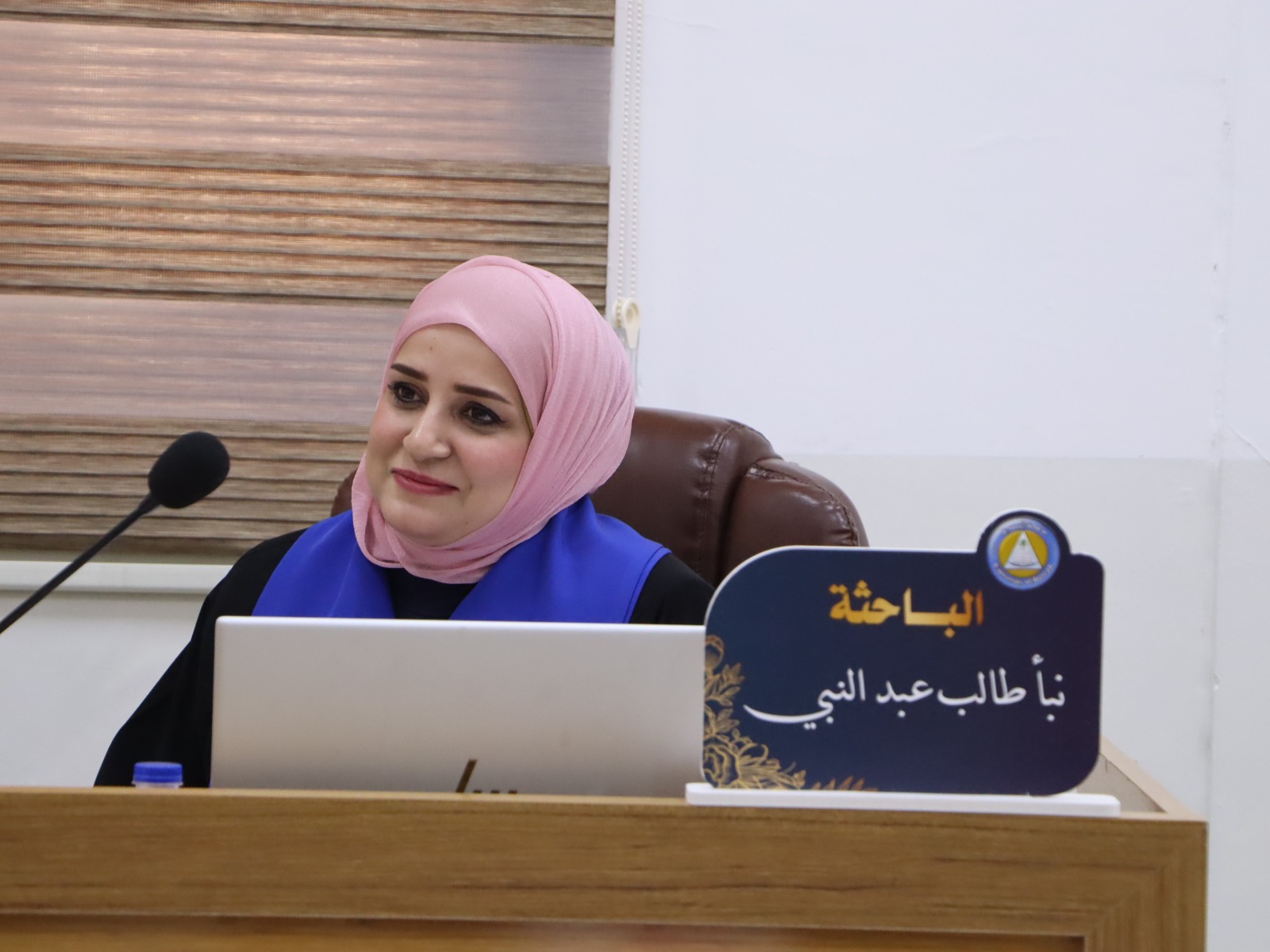
The Master's thesis of researcher Nabaa Talib Abdulnabi was discussed at the College of Engineering, University of Basrah, Department of Computer Engineering, under the supervision of Assistant Professor Dr. Wasan Abdul-Razzaq Wali. The thesis was titled "A Intelligent Self-Controlled Photovoltaic Solar
System using Polymer-Dispersed Liquid Crystal Technology
This work aims to design and develop an intelligent adaptive control system for solar irradiance control using polymer-dispersed liquid crystal (PDLC) smart membranes.
An adaptive fuzzy neural inference system (ANFIS) model was built to represent the physical behavior of the PDLC membrane. This model was combined with a proportional-integral-differential (PID) controller for height control and an iterative learning controller (ILC) for applied voltage control. The intelligent controller, designed in a three-stage model, predicts the desired irradiance in the first stage, based on the desired cell power. In the second stage, the membrane position and transparency are controlled through a game-theory competitive interaction between the ANFIS-PID and ANFIS-ILC controllers. The final stage directs the irradiance transferred from the PDLC membrane to the photovoltaic cells to generate maximum power at the irradiance level determined by Maximum Power Point Tracking (MPPT) algorithms. The results showed that the ILC controller is capable of handling minor variations in solar irradiance, while the PID controller excels at handling sharp and sudden changes. The results obtained from the game theory-based controller indicated the superiority of this strategy compared to using any single controller, and the proposed system offers high-level radiation regulation and control capabilities.
Liquid crystal technology was also employed to accurately diagnose and locate faults in solar cells and integrate it with machine learning algorithms for system management and monitoring. The study demonstrated the feasibility of PDLC films in controlling solar irradiance and transforming conventional cells into smart, adaptive cells. Furthermore, it provides a real-time and rapid method for locating faults in photovoltaic cells.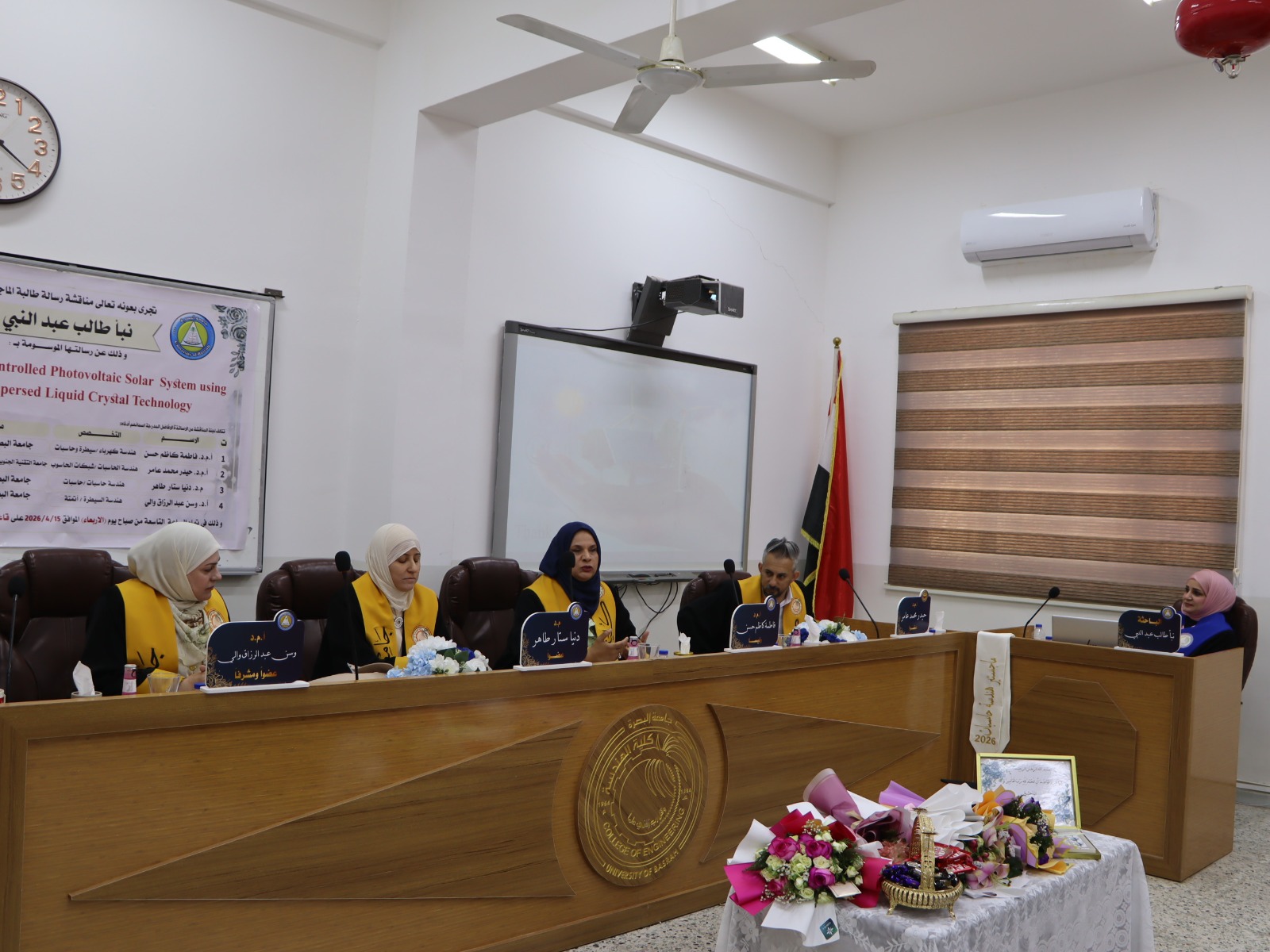
Important News


viewed most