The Master's thesis of researcher Bassam Abdulhameed Mohammed was discussed at the College of Engineering, University of Basrah, Department of Computer Engineering, under the supervision of Assistant Professor Dr. Wasan Abdulrazzaq Wali and Dr. Musab Adel Ali. The thesis, titled " Artificial Intelligence Techniques for Permeability Prediction using Core Information and Wireline Logging
" includes...
This study addresses the challenge of permeability estimation in carbonate reservoirs, which is characterized by high structural complexity due to extreme heterogeneity in rock properties, in addition to a significant gap between wireline log data and core data, along with the associated challenges of data completeness and quality in real-world engineering environments.
The framework is developed from an advanced computational engineering perspective, where geological and engineering data are treated as a Complex Engineering Data System requiring an integrated workflow of data cleaning, reconstruction, and transformation into machine-learning–ready representations. Data Engineering plays a fundamental role as a foundational layer to ensure data quality and stability prior to modeling.
The proposed methodology addresses key challenges, including wireline feature loss, by applying Machine Learning and Deep Learning models for data imputation and feature reconstruction, as well as facies and rock typing classification using Hybrid Deep Learning Models to achieve a more accurate representation of geological structures.
In addition, physics-derived properties extracted from core data are incorporated within a Physics-Informed Feature Engineering framework. Multi-level Optimization techniques are employed to enhance model accuracy and reduce error propagation across processing stages. This is further supported by an integrated statistical treatment across the Pre-processing, Training, and Post-processing phases to ensure data consistency and model stability.
The system is based on a Multi-Stage Training Pipeline initiated using the MASTER dataset as the primary learning reference, with strict separation between training and operational data to ensure a Leakage-Free Design. The pipeline begins with porosity estimation, followed by derived feature construction, and ultimately permeability prediction as an initial baseline model.
The results demonstrate progressive performance improvement across stages, where the baseline model (logkbase) achieved an R² of 0.8991, which increased to 0.955 after the first refinement stage (logkfinal), and further improved to 0.978 in the second refinement stage (logkfinal2), reflecting the effectiveness of the multi-stage learning strategy.
Subsequently, model performance is further enhanced through Residual Learning, integration of geological constraints, and Iterative Optimization, along with probabilistic uncertainty quantification using P10 / P50 / P90 intervals to support engineering decision-making.
In the deployment phase, the system operates under a Frozen Model environment, applying the same processing pipeline to unlabeled data, ensuring stability and reproducibility.
Overall, this framework represents a fully integrated Physics-Constrained AI system, combining artificial intelligence and geological physics to transform complex subsurface data into interpretable knowledge that supports decision-making in the oil and gas industry.
This framework also delivers direct financial and technical benefits by reducing operational costs, improving engineering efficiency, and enhancing data security and information confidentiality within a reliable operational environment.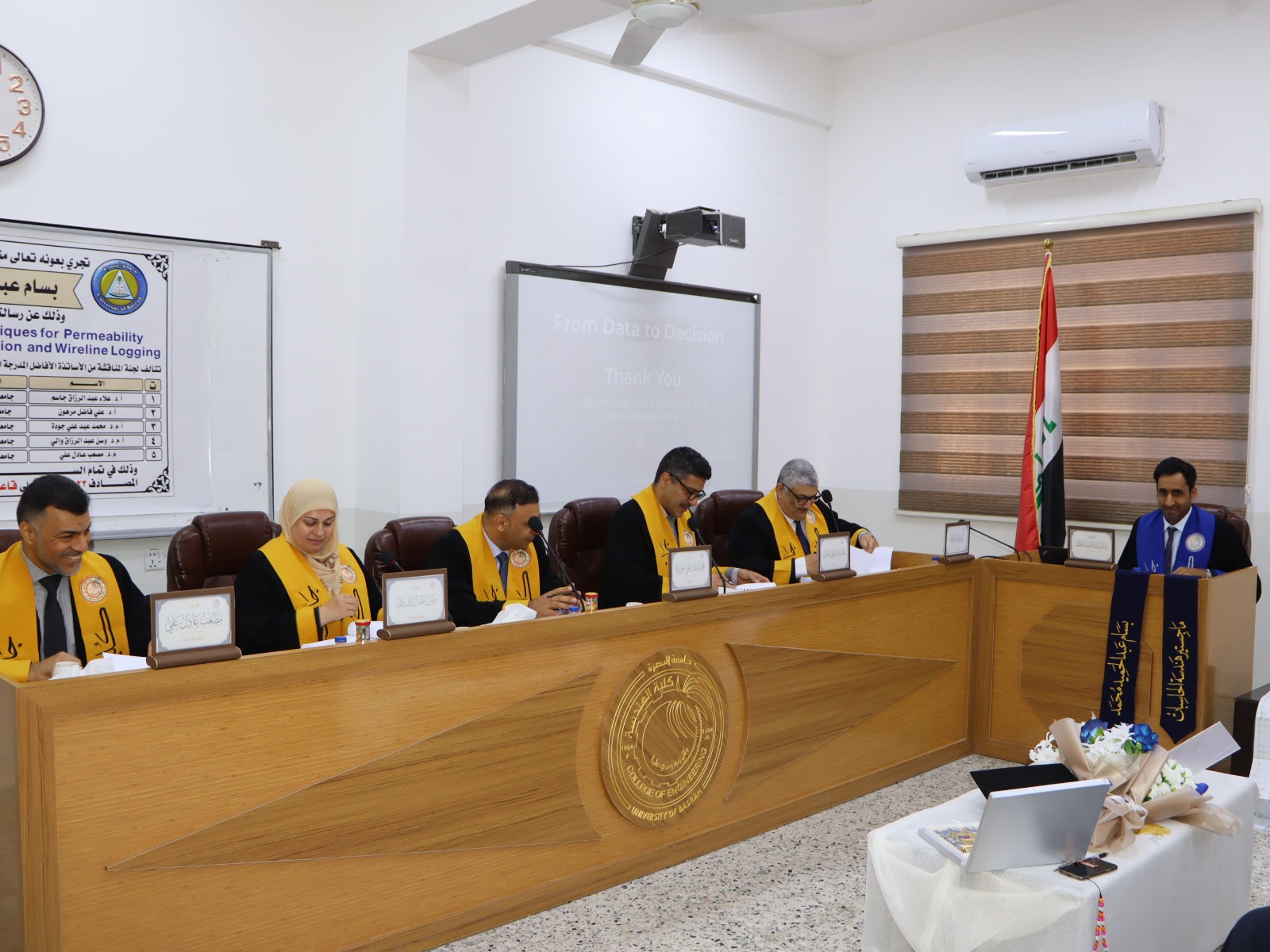
Important News


viewed most