A doctoral thesis by researcher Ikram Hassan Jaber was defended at the Department of Electrical Engineering, College of Engineering, University of Basrah. The research was supervised by Professor Ammar Abdul-Shaheed Abdul-Hamid and Professor Ali Fadhil Marhoon, and is titled: the Design Intelligent Techniques for Autism Spectrum Disorder Diagnoses
ABSTRACT
Despite significant advances in electroencephalography (EEG) based diagnostic systems, accurate diagnosis of ASD remains challenging due to the nonlinear, non-static, and high-dimensional nature of EEG signals. Conventional machine learning classifiers often cannot generally model the complex nonlinear relationships existing in the features of the EEG. This thesis presents a set of novel Kulczynski Similarity (KS)-based frameworks for EEG-driven ASD diagnosis, addressing both classification and feature selection problems. The first framework introduces a similarity-driven EEG classifier that exploits the discriminative relationships embedded within EEG feature representations. The proposed KS-based classifier segments the EEG signals into varying block sizes, small (2–5 samples), medium (6–10 samples), large (11–15 samples), and full-length to better capture localized temporal patterns associated with ASD characteristics. Furthermore, standard Particle Swarm Optimization (PSO) is integrated with the KS classifier to reduce the feature search space from 47 to 30, resulting in improved computational efficiency and higher classification performance. The approach was evaluated on the publicly available EEG dataset from the University of Sheffield, achieving an accuracy of 99.28% with PSO compared to 98.27% without PSO, representing a 36.17% reduction in the feature space and reducing the average execution time per sample from 1.33 ms to 1.09 ms.
To further address the challenges of feature redundancy and dimensionality, a second framework was developed based on the KS measure for deterministic feature selection. This framework ranks features according to their similarity, retaining those with high harmony that are most relevant for diagnosis, and discarding non-contributory dimensions. To evaluate the effectiveness of the KS framework, three configurations were compared: the complete EEG feature set, features selected with standard PSO, and features selected with the proposed KS method. While PSO retained 30 out of 47 features (63.83% selection ratio and 36.17% reduction ratio), KS achieved a more compact subset of 28 features (59.57% selection ratio and 40.43% reduction ratio), achieving an additional 4.26% improvement in both selection and reduction ratios over PSO. Despite using fewer inputs, KS consistently delivered higher performance across five classifiers. The best accuracy was obtained by k-Nearest Neighbor (KNN) at 99.20%.
To assess the robustness and generalization capability of the proposed methodologies, both frameworks were subsequently validated on an independent EEG dataset collected at King Abdulaziz University (KAU), after applying advanced preprocessing techniques. The KS classifier achieved an accuracy of 96.78% using the complete set of 288 EEG features. Following KS-based feature selection, the feature space was reduced to 86 features, corresponding to a 70.14% dimensionality reduction, outperforming the standard PSO (which retained 145 out of 288 features). The resulting feature subset yielded superior classification performance, achieving a maximum accuracy of 99.74% using XGBoost. The experimental findings demonstrate that similarity-driven learning provides an effective mechanism for capturing ASD-related EEG characteristics with high accuracy, low latency, and minimal computational requirements. Thereby supporting fog- and cloud-computing-enabled real-time diagnostics and clinical decision systems for efficient EEG analysis in early ASD detection and better patient care.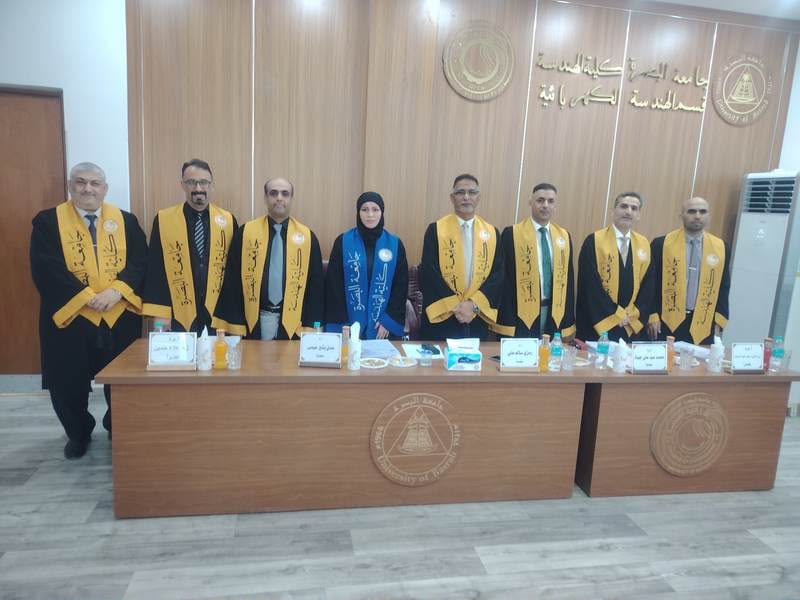
Important News


viewed most