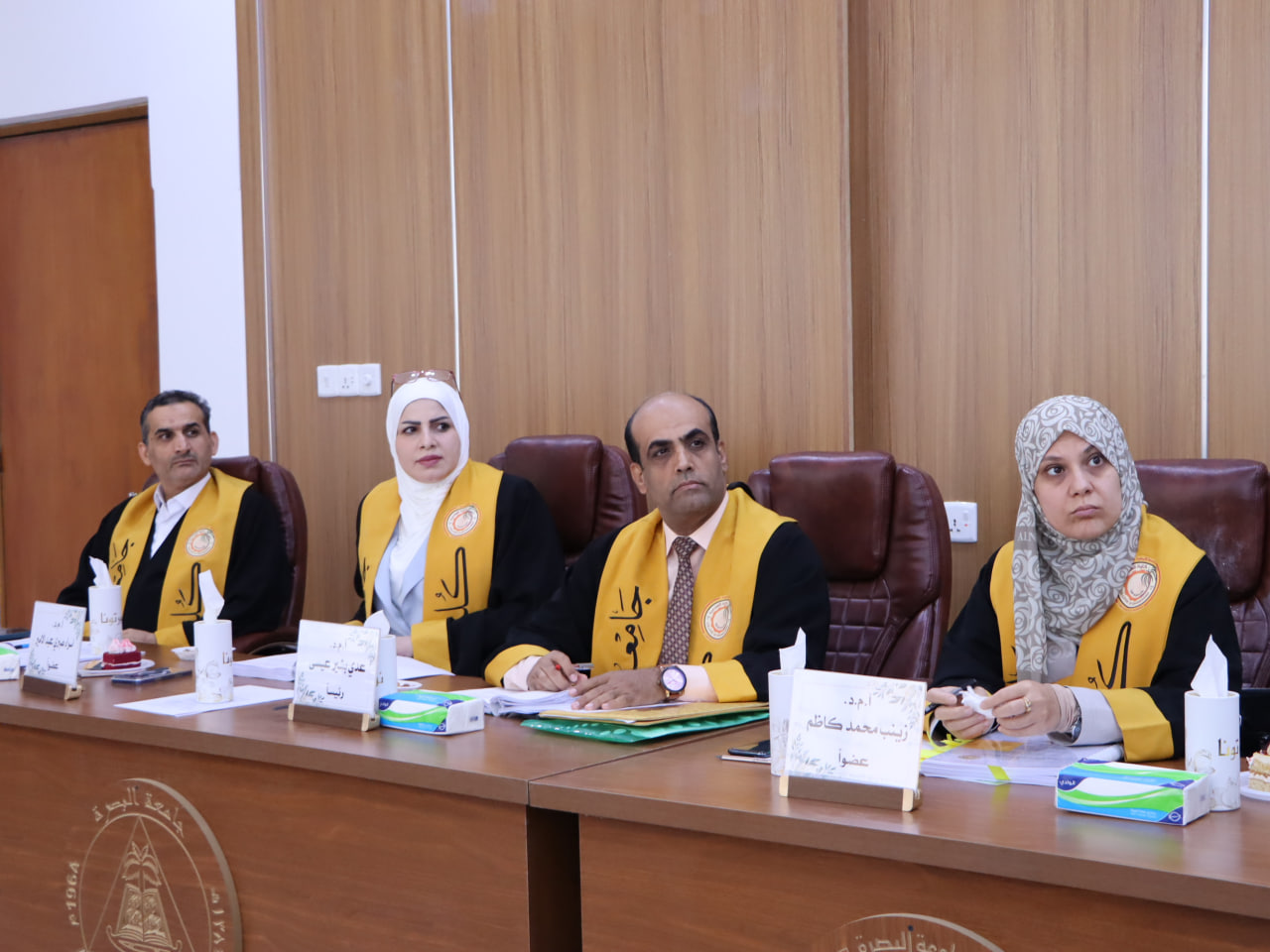
A master's thesis by researcher Raghdan Abdul-Razzaq Lazim was defended at the Department of Electrical Engineering, College of Engineering, University of Basrah. Supervised by Professor Dr. Ammar Abdul-Shaheed Abdul-Hamid, the thesis is titled Implement Cathodic Protection Control System to Prevent the Corrosion of Oil Pipelines
The field of cathodic protection (CP) is one of the important priorities of modern industrial companies, due to its role in protecting essential metal equipment in any industrial process. This project focuses on designing a practical prototype that accuratelysimulates a real CP system. This proposed prototype ischaracterized by its ability to analyze the behavior of error (the difference between the set point and the measured polarization voltage Vpol(on)) so as toprovide the operator the nature of errors, in addition tocounting the cumulative intervals of the occurrence foreach error type. The design integrates three control devices: Arduino, ESP and computer, by these three embedded devices, the required control action is implemented by controlling the applied rectifier voltage to ensure that the oil pipe is under the correct protection level. Additionally, the process of CP system operation is accurately monitored and analyzed so as to provide the supervisor with a detailed report containing the protection status and early fault detection. This enables early maintenance, saving the effort, time, and cost that could be spent in conducting periodic on-site inspections.
The analyzing examination phase was applied to the designed model by generating various types of errors so as to test the prototype’s ability in recognizing the nature of them. The proposed prototype excels in this function by demonstrating a precise sensitivity in separating errors into two categories (normal and abnormal) reporting their cumulative occurrence intervals.
The monitoring process has been achieved by a local monitoring panel in addition to cloud monitoring techniques using smart phones, and computers. The remote access to the data has been involved in two phases: The first phase was the access using simple communication devices (by a Wi-Fi network and IP address) to view the operation status of the CP system by a web page including tables and graphs. While, the second phase was specialized for the control room monitoring through an advanced software (MATLAB), for further analyzing and displaying the status of the CP system precisely.
Furthermore, due to the complexity of the most industrial operations, the virtual simulation techniques were adopted. Where in such complex systems, the mathematical calculations to predict their behavior are difficult, so simulation is a critical issue in modern oil production industries (and of course in CP systems). In this project, the extracted data from the prototype were used to train two powerful machine learning (ML)tools that are the Neural Network (NN) and the Adaptive Neuro Fuzzy Inference System (ANFIS). Where the collected data (that used to train these tools)were validated and confirmed by an engineering team at Basrah Oil Company (BOC) / Engineering Maintenance Division / Cathodic Protection Department. The two ML tools simulated the behavior of the proposed prototype successfully, with accuracy values ranging between (99.93%) for the NN and (99.96%) for the ANFIS.
Additionally, three applications were introduced using the trained models mentioned above. The first application was to verify the possibility of protecting several pipelines by connecting them to a single rectifier. The second application was the process of detecting the fault of sensor failure depending on the offline training. While the third application was a new method of filtration by separating the noise from the pure signal by introducing the technique of machine learning and logical algorithms, achieving a filtration accuracy of 95.742 %.
Important News


viewed most